Sunday, July 02, 2006

Biking in Bangalore's backyard


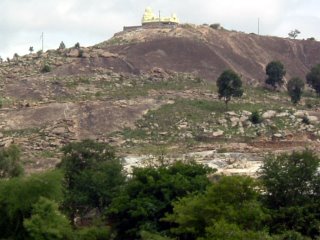
Rocky cliffs around Kanakapura


Yesterday (July 2, 2006) was one of the better outings, I have been on in the past several weekends. The Original plan was that Dev, Anand and myslef would get together with our iron horses and of course Anand's is a Rhinocerous not a horse, and steer them towards Kanakapura and roam in the wilderness, climb a mountain, swim in a river and ride back home by evening.

Dev and I were scheduled to meet at 6.30 am at my place and then head towards Basavangudi where Anand would join us at 7 am. At 6.15 my mobile starts ringing and it is Dev on the other end. "Hey Sri, there is an emergency in the office. It seems our editor quit his job last night and they have called us all at 11 am for the meeting. Why did he have to quit yesterday, couldn't he quit on Monday?" said Dev ruefully adding that he wouldn't be able to make it and wished us a good time. After exactly 5 minutes Anand smsed saying he had already left from home. I got ready and proceeded towards our meeting place and reached there in good time but there was no sign of Anand.


After about 10 mins Anand chugged in and then we started off towards Jayanagar for breakfast of Idly and Sambar at Pavitra Paradise. Having filled ourselves we decided to head out and get out of the city asap. And get out we did.... our first stop was at the Vajramuneeshwara temple just out of the city off Kanakapura Road. The NICE BMIC has just missed this ancient temple by about 200 meters.

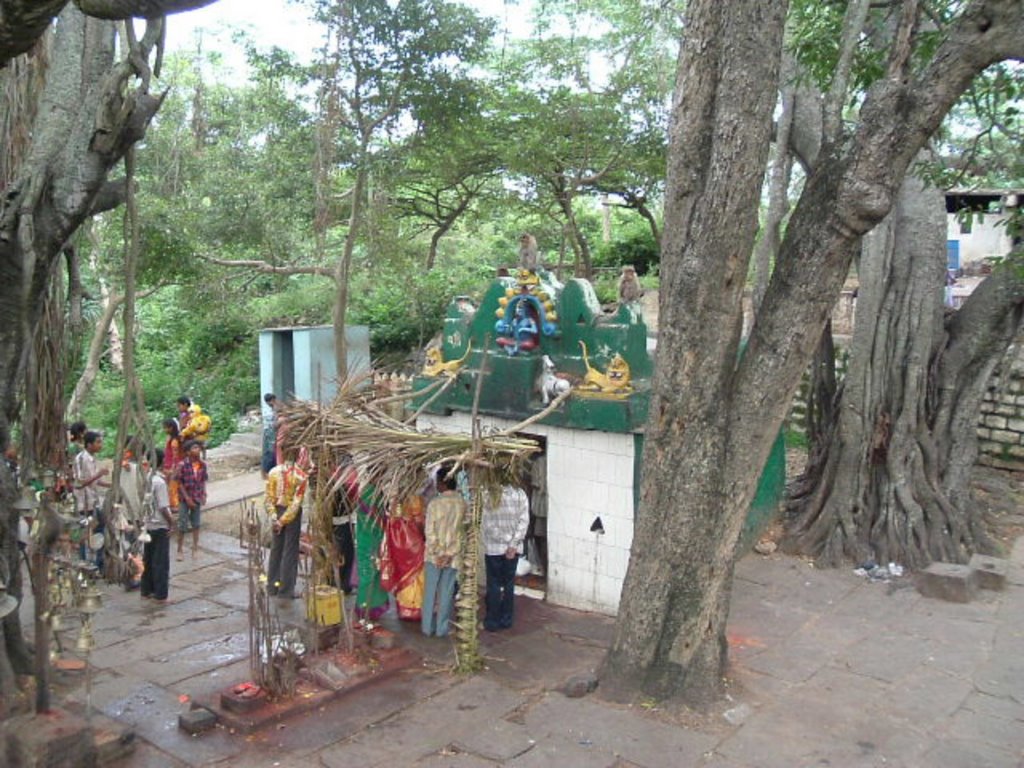
The temple had been famous in the recent years for elephant attacks on human beings and had even killed couple of farmers in the region. But now with the NICE road coming up I am sure elephants wouldn't dare to venture here. Anyway coming to the tepmple per se... like all Muneswara temples this too is an open air temple, sited at the fringe of a beautiful forest and hill region. There are two large banyan trees under which Lord Muneswara is consecreted.


Vajramuneshwara temple

The descent to the temple via a short flight of steps transports one to a different world altogether. The temple has stone flooring and a roof of leaves and branches, there is a small shrine dedicated to Shiva, and a natural spring provides drinking water to visitors. We were pretty early and there was hardly anybody at the shrine. Only the temple authorities cleaning the mess inside the temple and dirtying the forest around. A stream runs in front of the temple about 100 meters away amidst thick almost inaccessible forest.


We decided to skirt around the temple and explore the forest as we heard the call of peacocks and sounds of other animals. Truging through the forest we saw a check dam being constructed close by, the roads being built by NICE and the Vaderahalli lake far away. Again we heard the Peacock... this time very loud and close. We followed the sound into the bushes and there in front of us about 100 meters away was a single peacock gracefully walking, weaving in and out of the bushes. Taking in these sights we moved and returned to the bikes at the Muneswara temple, where by then a large crowd of people with sacrifices of Chicken, Lamb etc had accumulated and were ready to perform the ghastly act of killing innocent animals in the name of god.


Chicken ready for slaughter


From here we decided to head to Chunchi Falls and from there to Kabbal before finally returning to Bangalore via Chennapatna, Ramanagaram and Bidadi. Look out for the next post coming soon.

Sunday, June 18, 2006

Outing to Devara Betta (Thevar Betta) in neighbouring Tamil Nadu
Devara Betta temple atop the hill

Sunday dawned bright and crisp and was I raring to go.

The destination was towards Tamil Nadu and the plan to visit Devara Betta and Navadarshanam an ecofriendly farm community whose members are living as per natures ways.

Starting off early in the morning at 5.30 am I was lucky to get out of the city before the morning picnickers and others started their journeys. Hosur notoriously famous for traffic jams and unruly driving was strangely empty and the smooth flow of traffic with cool breeze hitting my face I made good progress.

Soon I was at Chandapura circle where I turned right and sped on towards Ankal. Unlike Bangalore city, here I could see rural folk fully active, farmers taking their bulls to the fields, some already at work in the fields, women drawing water from wells, some carrying sack loads on their heads and walking towards the bus stop, perhaps to take produce to the city market to sell.

Anekal was a little chaotic because of the election happening, there was all parties trying to put up stalls to canvass for votes right on the main road. Luckily I moved out of the city quickly and soon was on the Thali road heading towards Devara Betta. From Anekal it is only 7 km to Gummalapuram which is on the other side of the border. From Gummalapuram one has to travel further about 20 km on Thali road to reach Gopasandra and turn right there for Devara Betta.

Soon after crossing Ankeal the road becomes quite bad, and potholed. But after Gummalapuram there is no road at all, there is only a semblance that there might have been an asphalted road sometime in the distant past. But anyway the scenery flanking the road is well worth the bumpy ride. Lush green fields, far hillocks, punctuated by quaint temples take away the road fatigue.


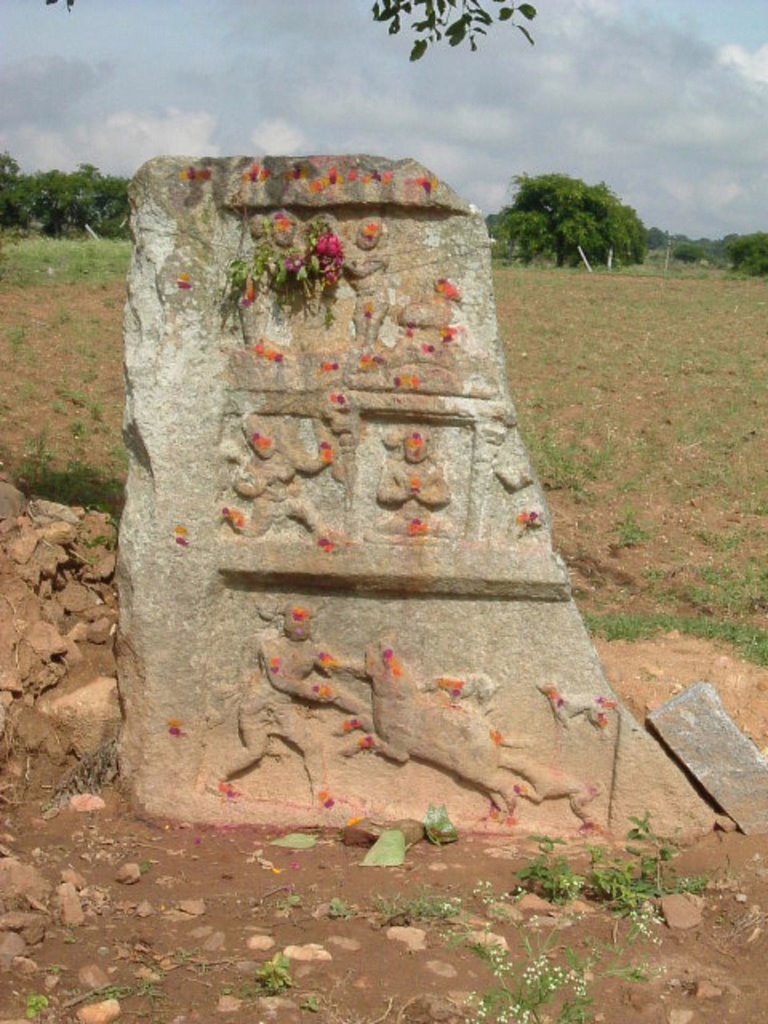
Damaged Herostone at Gummalapuram


Before reaching Gopasandra, I stopped at a small viragal (Herostone) temple and to my surprise found two more damaged herostones in the fields close by. Though the herostones are attractively carved they are neglected and most of them are lieing here and there without any attention being paid to them.

One thing is surprising, everyone here speaks fluent Kannada without even a hit of Tamil accent in their voices. And like all villagers in India, they are highly helpful and provide good directions. At Shamanatham village one of the villagers informed me that the road to Devara Betta from Gopasandra was a completely tar road. Expecting a smooth road I rode on but that was not to be, the road from Gopasandra to Devarabetta must have been tarred some 20 years ago and today it is falling to bits. Only potholes and jelly stones greeted my tyres and suspension.


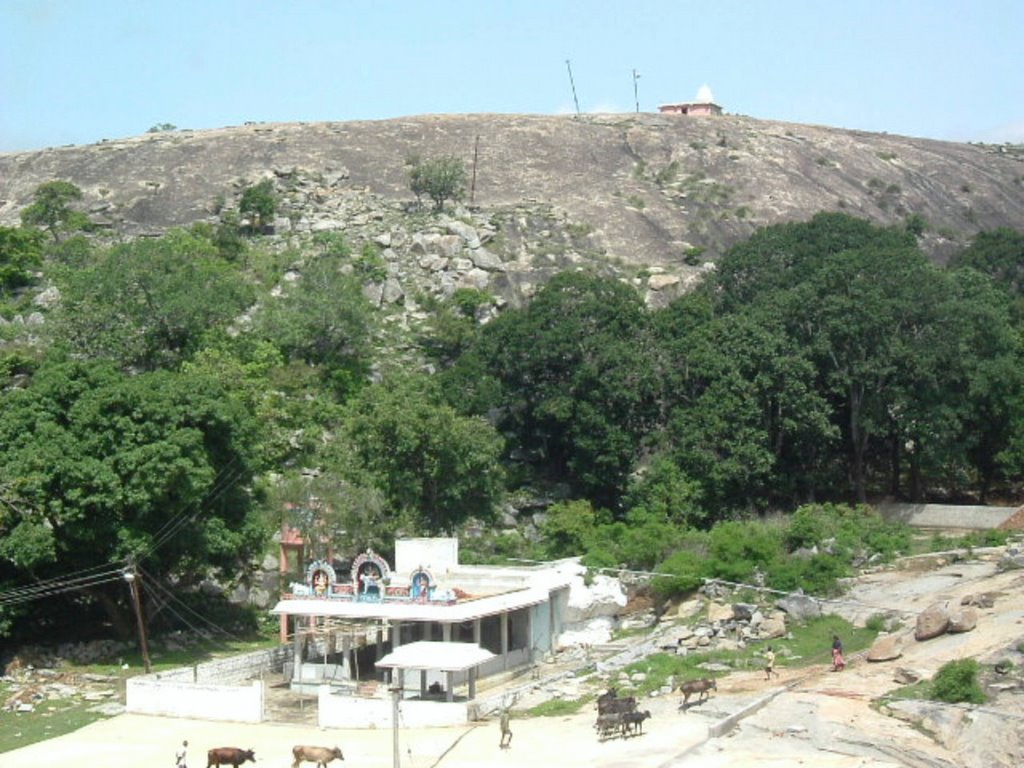
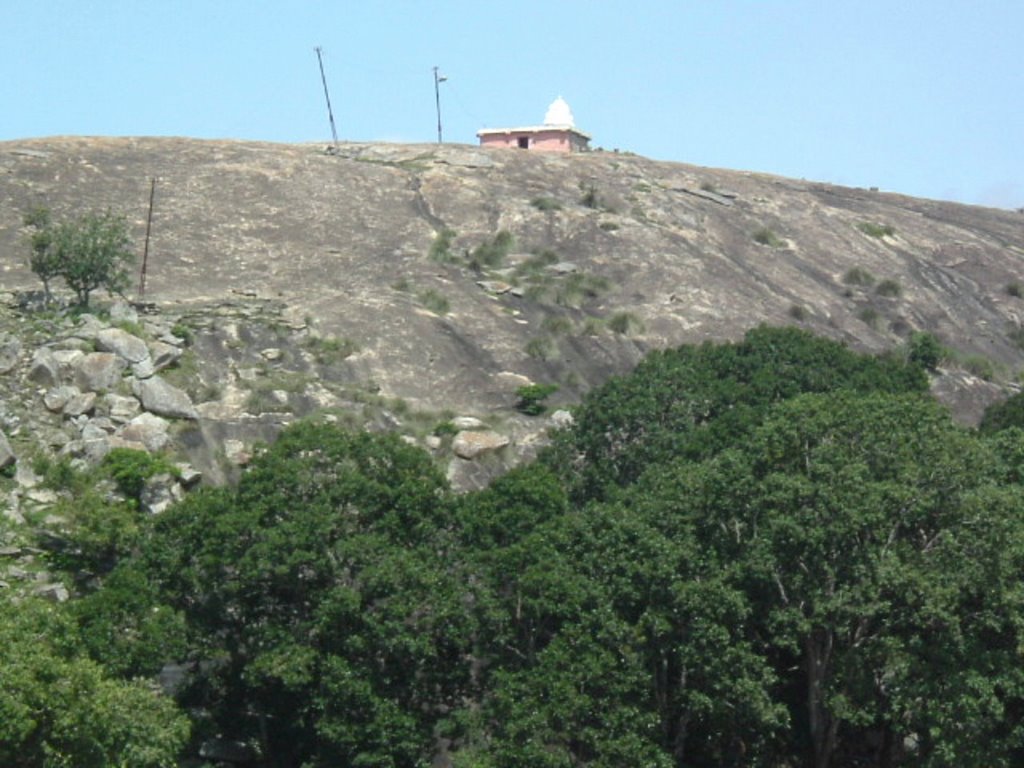
Devara Betta hill and temple atop


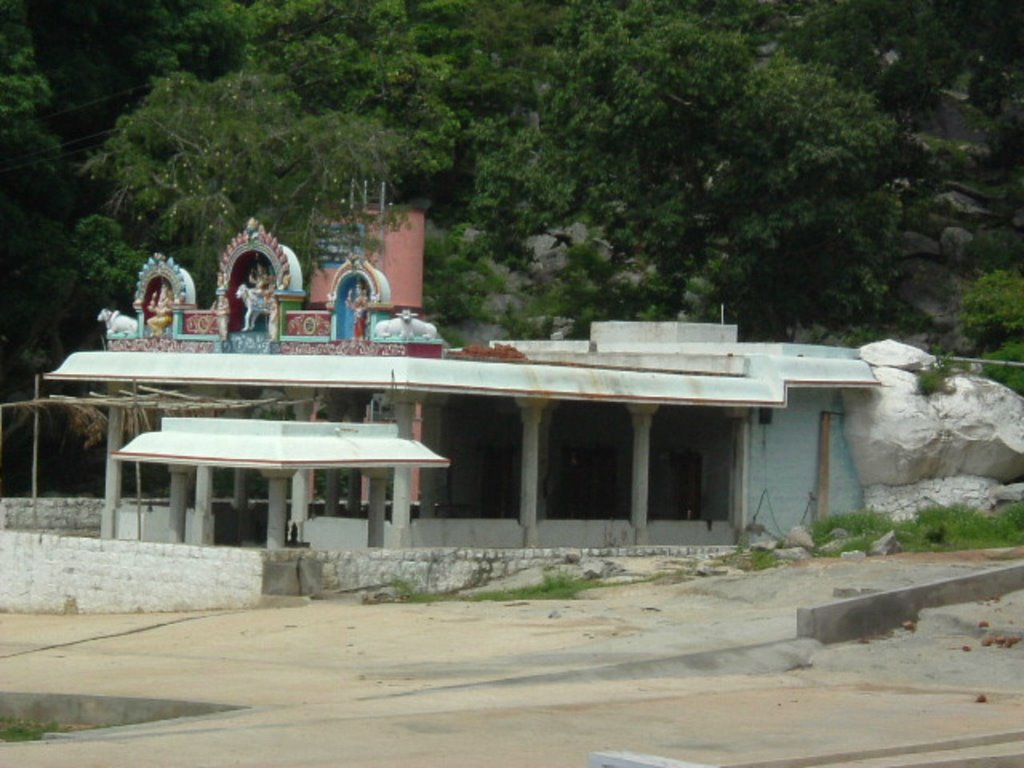
But the panoramic view of the distant twin-rocky hills crowned by temple kept me going. After a 30-minute, (7 km) ride I reached the base of Devara betta and was dismayed to find that the temple mafia had already established base here also. But fortuntely being sited at the edge of the Thally reserved forest, not much damage has been done to the greenery and environment except building of several concrete structures which successfully obstruct the view of the hills.

There is a large modern temple complex, two rainwater harvesting tanks and several modern buildings in the valley between two tall rocky cliffs. The left one is Devara betta crowned by the Shiva temple. There are no steps and one has to scramble up to the top by the easiest way suitable for him. The climb is well worth the effort as the top of the hill offers fantastic view of the Thally reserve forest. The quaint temple atop is open only on saturdays and festive occasions. Otherwise devotees just pay obeisance to the lord through the grill door, rest a while and head back.


Devara Betta hill and temple atop


Due to some strange belief villagers who come here lay a cairn of stones and return back. Cairn is a small construction made of rough stones laid one above the other. It is believed that if one seeks any specific desire to be fulfilled he/ she has to place a cairn atop here and it will be fulfilled. Looking at the number of cairns I am sure God has a tough task ahead fulfilling the desires of so many people.

From Thevar Betta I retraced my journey till Gummalapuram and turned left to visit Navadarshanam farm. Navadarshanam (‘new vision’) ashram is the brainchild of a few people who dared to defy the stringent demands laid down by a consumerist world. This is a place where a group of people have chosen to live one with nature, learning the lessons it has to offer and sharing their experiences with society. Fifteen years ago this 110-acre piece of land had fallen prey to man’s deforestation spree and desertified. But today Today, the land is home to over 100,000 trees, which play host to a variety of species of birds.

The farm generates its own electricity through solar, wind and other energy sources. They grow their own food and water is from the borewell.

“Nature has its own ways of healing. We din't plant a single tree in this land. All we did was to stop grazing and rest was done by nature,” says Ananthu, a post-graduate in systems design from Stanford University, who, with a group of like minded people, started Navadarshanam - an offshoot of a study circle in Delhi many years ago and to put the Gandhian thought and ideals started this farm.

It was a wonderful experience interacting with Ananthu and going around the farm. According to Ananthu, they have only fenced off 25 percent of the total land area and remaining part is left for nature to heal itself. This has resulted in excellent growth of greenery and trees and several herds of Deer, wild boar and other animals have already made this green acres their homes.

My aim is to do something similar, I hope I will be able to achieve it in future.

Saturday, June 10, 2006

Life Sucks

The weekend started and ended.... and I was stuck in my cubby hole at workplace the entire day on Saturday. And feeling hassled about it I spoilt my sunday by not going out.... I was in in the office... slogging it out on Saturday... to make others rich... what do I get... nothing... not even a word of thanks...

Luckily my old friend Ranga came to meet me on Sunday and it was a morning well spent... we had lunch at Sai Shakthi hotel, Malleswaram and caught up with each others lives... as we had met up after nearly 5 months... nice.. some kind of a consolation prize for losing a weekend amidst rocks and wilderness...

Let us see... and wait with a hope that next weekend is more relaxed and I get my planned offs... so I can go out and do photography.... on a bright and clear day to climb hills, descend ravines, wade through streams, stare at the open skys, reflect beside calm lakes....

only time will answer....

Sunday, June 04, 2006

Shankareswara Betta facade - serene surroundings
Hectic and fulfilling weekend

It was a fantastic experiential weekend (June 3-4).

Friday night I was still unsure about where I was going and had kinda decided to go to the far away places on Kunigal-Maddur road about 85 km from Bangalore and if necessary stretch the outing to two days. But luckily given the enabling and enthusiastic company I had with me we could complete our list of items on Saturday itself which gave me the time to return home for a good night's rest and another day of biking in Bangalore's backyard.

Saturday morning dawned with misty weather and I got up wondering whether we are going to have a rainy day... soon Dev called and told me that he would pick me up with his friends in half an hour and truely he arrived with Sabin and John. After initial introductions we started off towards Magadi road and 55 km down the line stopped for breakfast in a small non-descript eatery to have lukewarm idly with spicy chutney.

Another hours drive took us to the base of Shankareswara Betta, a quaint and bald rocky hill surrounded by lush green fields, quaint villages and other rocky hills. The area is under attack by the granite mafia and I am sure whatever wildlife which was there has either been killed or scared away by the continuous quarry blasts and so many labourers working in the area.

It is saddening to see the pace with which rocky hills being murdered systematically with the adminsitration conveniently looking away. When are we going to gear up and start preserving our environment and habitats for the wild???

Anyway my lament will always be there on the side of preservation but let us come back to Shankareswara Betta. The temple authorities are doing some major work here in the name of devotion and renovation. The ancient temple is being renovated big time with new building, paint job and the worst thing that the temple trust wants to do is to build a flight of steps to the top of the hill. The gradients leading to the top of the hill is mostly gentle and accessible by everyone.. I wonder why they are building the steps and renovating a temple to which there are hardly any visitors.

I suspect it is the design of the granite mafia. To build/ renovate a temple and thus keep the villagers happy, pay off the inspectors and laugh all the way to the bank, so what if the environment goes to dogs.

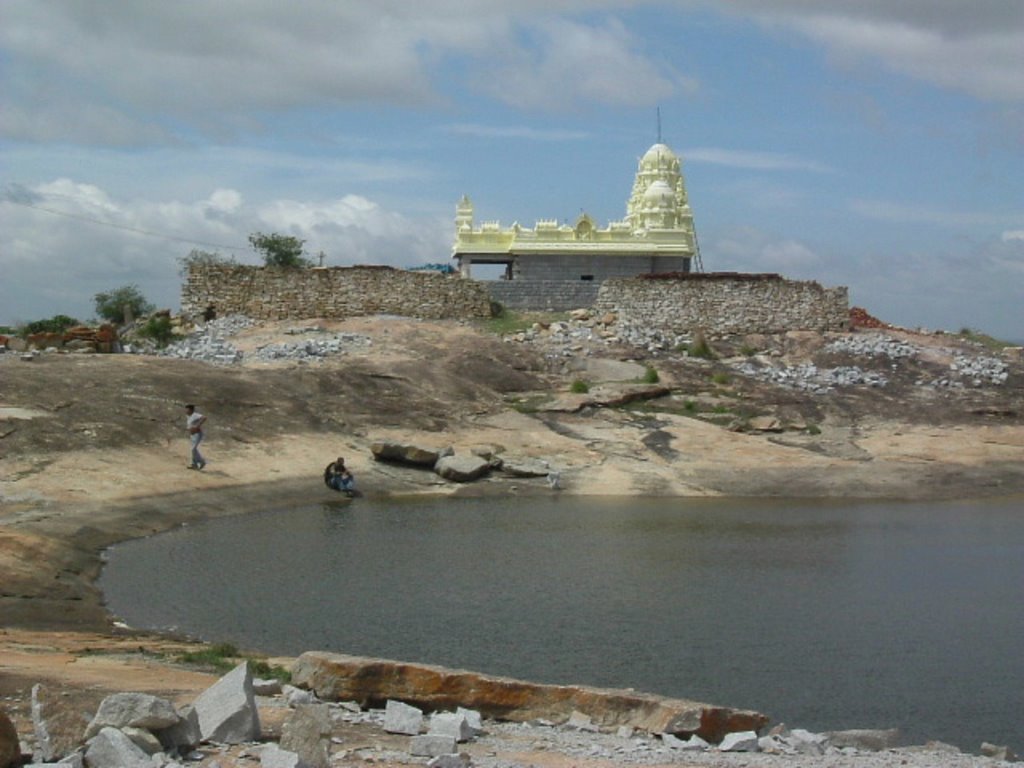
Temple & lake atop the hill

The top of Shankareswara hill has a quaint temple surrounded by stone wall and one side of the hill has a fairly deep and large natural water tank, perhaps to harvest rainwater for the use of temple visitors. Surprisingly the water is very clear and clean Dev and Sabin even had a drink and we were ruing that we hadn't got our swimming gear or we could have taken a dip.

From the top of the hill one can get panoramic views of the surrounding hills, fields and of course the granite quarrying.

From Shankareswara betta we moved on and drove further for about 15 km to reach Huliyurdurga - a massive rocky cliff surrounded by a thick forests. As the name 'Huliyur' suggests, this village and hill was the habitat of tigers, a la Ranthambore. Alas thanks to the development the majestic national animal no longer exists here. Instead the cunning and destructive human species has virtually encroached the fort almost upto the first level of fortifications.

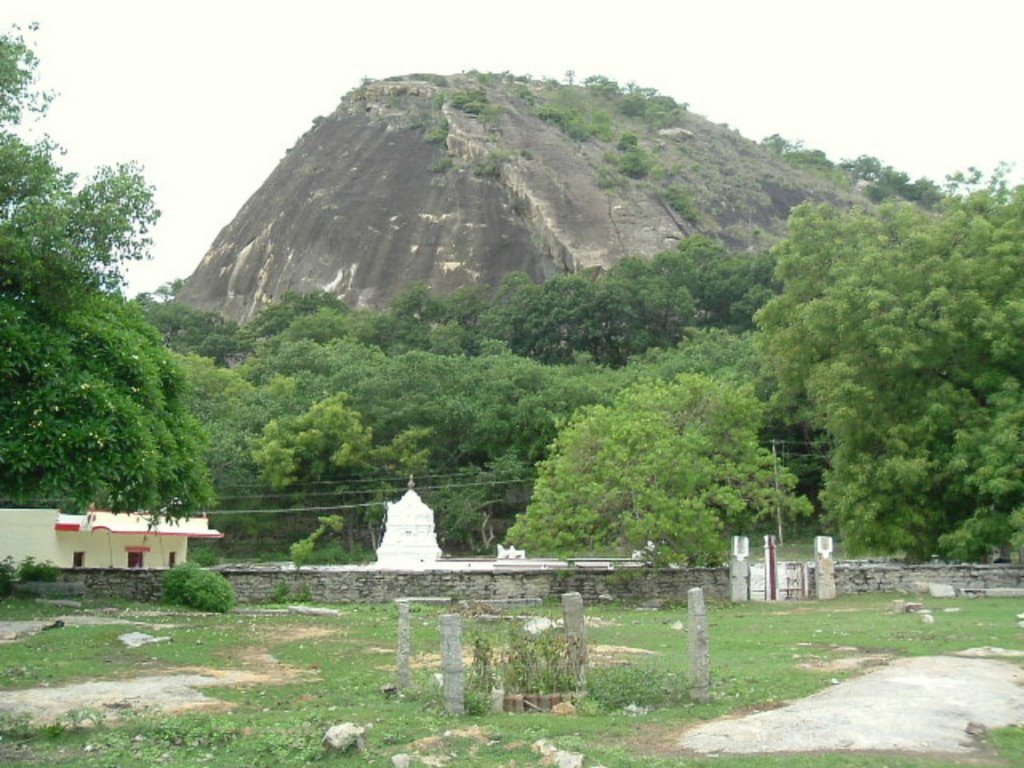
Hemagiriyappa temple at base of Hemagiri hill

Having decided to climb Hemagiri first we moved another 2 km from Huliyurdurga to reach the vast forested hill which has a temple at the base, in the middle and atop also. The temple at the base is dedicated to Varadaraja swamy aka Hemagiriyappa and is an ancient structure. The surroundings of the temple is just too heavenly. A sole tiled house has been built for the temple caretaker and priest. A fairly large stone pond with several fish forms the highlight of the place. Large number of trees with comfortable platforms around makes the place highly suitable for a weekend picnic.

But typically like all temple/ religious places people only want to pray, they don't want to keep the surroundings clean and neat. One can see used plastic glasses and plates strewn all over the place. First plastics are being banned all over the world and here we are, using it rampantly without a thought about the harm we are causing to the nature and in turn ourselves.

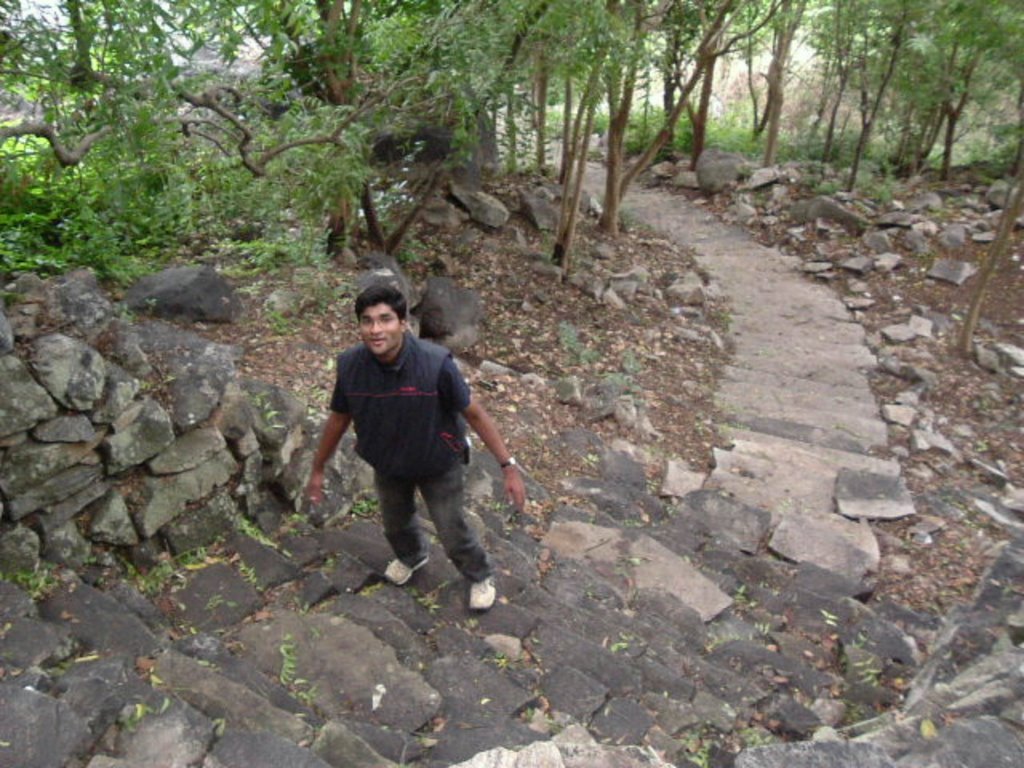
Acent to cave temple

Well the cave temple dedicated to lord Shiva is located in the middle point of the hill on the far side (about 1.5 km from the Varadaraja temple) and is accessible via a steep flight of evenly laid steps. We went there and decided to do a small gig of rockclimbing too and then head back to Huliyurdurga.

Huliyur durga peak
Parking our vehicles at the base of the hill we started on the steep ascent and soon arrived at the first level of fortifications which is perhaps the largest open/ wooded stretch of land in the fort, housing two ancient temples which are no longer in use. The next stretch was on a fairly beaten path which ended at a small Ganesha temple. The next and final stretch came as a cropper. There was absolutely no path and we were faced by a steep rockface with about 85 degre gradient. There was no indication whether we were on the right path or not... the only indication was the next tier of fort wall which was seen from where we stood.

Our decision to climb was not in vain it gave us a fantastic experience of climbing and Sabin who reached the top first looked back and said "Hey it is a drop all the way to the village, No way I am going to descend this way". John, Dev and me followed and true enough the drop looked quite formidable. Not wanting to get psyched we moved ahead and reached the top of the hill after negotiating two more levels of fortifications. The top provides some of the most panoramic views of the large town below on one side. We can see Hamagiri face to face on the other as if beckoning us to climb.

The remains of fortifications ascribed to Kempe gowda will disappear soon unless protected... but who has to do that... the Archaeological Survey of India and Karnataka State Archaeological department have their hands full and don't have the manpower to do that. We hope the villagers will take some interest in the restoration and maintain the fort. There are several small rainwater harvesting pits built some hundreds of years ago atop the hill. Indeed the kings of the yore knew the importance of water harvesting and preservation which we somehow caught in the 30X40 culture and concrete and cement ideology have ignored.

Temple in Huliyurdurga fort

While descending down the hill we got caught in a small rain which luckily subsided soon and we came down safe and sound, started our vehicles and headed back to Bangalore on the Huliyurdurga-Magadi-Bangalore road which passes through two lush green stretches of the protected Ippadi and Huliyurdurga state forests, a scenic lake and couple of temples before coming to the big bad city.

Thursday, June 01, 2006

Kanva Dam - view from a hill top nearby
Link to an article I had written about the dam in Deccan Herald, Bangalore's oldest daily newspaper.

I visited Kanva dam for the first time in January 2000 and was highly impressed. The dam was in its full glory with the water filled to its brim. The vast size and crystal clear water really alluring and inviting me to jump in and take a dip. But due to paucity of time we couldn't get into water then.

Since then I have visited Kanva several times and seen it in various stages of filling. I saw Kanva totally dry and almost bereft of all water in 2003-4 when the region experienced severe drought and no rains. Now thanks to last years heavy rains the dam is slowly filing up and regaining lost glory.

Nevertheless the dam didn't lose allure and its serene ambiance during all these years and it lured me to visit hgere again and again. Being in a valley mobile signals don't reach here and this is one of the few places near Bangalore where one can see lush greenery all around the place and the water body acts as a fulcrum. Last week I visited the place again and had a great swim and came back rejuvenated.

But of late there has been an increased awareness of the existence of the dam and there has been an increase in number of visitors. This is putting a lot of pressure on the local eco-system in terms of plastic waster, litter, water pollution because most bathers/ swimmers use soap and detergents which form a film over the water surface.. fish get affected and in turn bird life too.

I hope at least readers of this blog will not pollute the place further...

Tuesday, May 30, 2006

Did you know that this 500-year-old fort is only 35 km from Bangalore???


Did you know that this ancient temple is in electronics city?

Hi friends/ readers,

Welcome to my online blog. I am a travel writer and a journalist with over 200 published articles to my credit.

For the daily dose of rice and sambar which keeps me alive and kicking and breathing and climbing and bikeing and travelling, I work for India's sole education newsmagazine - EducationWorld. The focus of our monthly is education and related issues. My job involves a mix of attending press conferences, interviewing people, students, professors, businessmen, politicians, bureaucrats etc.

The best part of my job is ofcourse working on the Leisure and Travel section in our magazine. It gives me immense pleasure and happiness to work on this section which has provided me numerous opportunities to travel to far away locales including Andhra Pradesh, Uttaranchal, Delhi, Coorg etc in India and Abu Dhabi, Dubai, Sharjah and Fujayarah in the UAE (United Arab Emirates).

Apart from the job I also do a lot of freelance writing for a host of publications (both print and online) in India and abroad. What I found in the past few years of travelling and working is that there is no proper sustained documentation of tourist destinations in India. Tourism in India is a totally under utilised field and successive governments during the past six decades of post-independence have miserably failed to capitalise on our vast huge size, snow clad himalayas, lush green forests, golden beaches, over 5,000 year historical heritage and numerous other natural attractions.

This has resulted in a deepset ignorance among everyone including us, Indians that we don't have much tourism because we don't have tourist attractions. This is the issue I wish to address in my own small way by writing about Bangalore and Karnataka. This blog is dedicated to Bangalore and its surroundings. I have travelled extensively in and around Bangalore during weekends and have identified several places which are worth visiting over a weekend. Many places can be done in half a day or one day and offer soul soothing ambiance.

I hope readers will help me by giving feedback about my writing and guide me in the right direction in documenting Bangalore and its environs.
Starting this week I will write up the places I visit every weekend. I hope this small effort will be complemented by people who will visit the places reading about them here.

warm regards